
Understanding the Need for Scalability
KEDA’s versatility makes it applicable to a wide range of use cases:
- Microservices: Scale individual microservices based on their specific event triggers, ensuring optimal resource allocation.
- Serverless Computing: Enhance serverless applications with the ability to scale seamlessly in response to incoming events.
- IoT Applications: Handle IoT workloads efficiently by scaling based on sensor data or device interactions.
- Message Processing: Automatically scale applications processing messages from queues or event hubs, maintaining responsiveness even under high load
Implementing KEDA in Your Kubernetes Environment
Getting Started with KEDA
To start leveraging KEDA in your Kubernetes environment, you’ll need to:
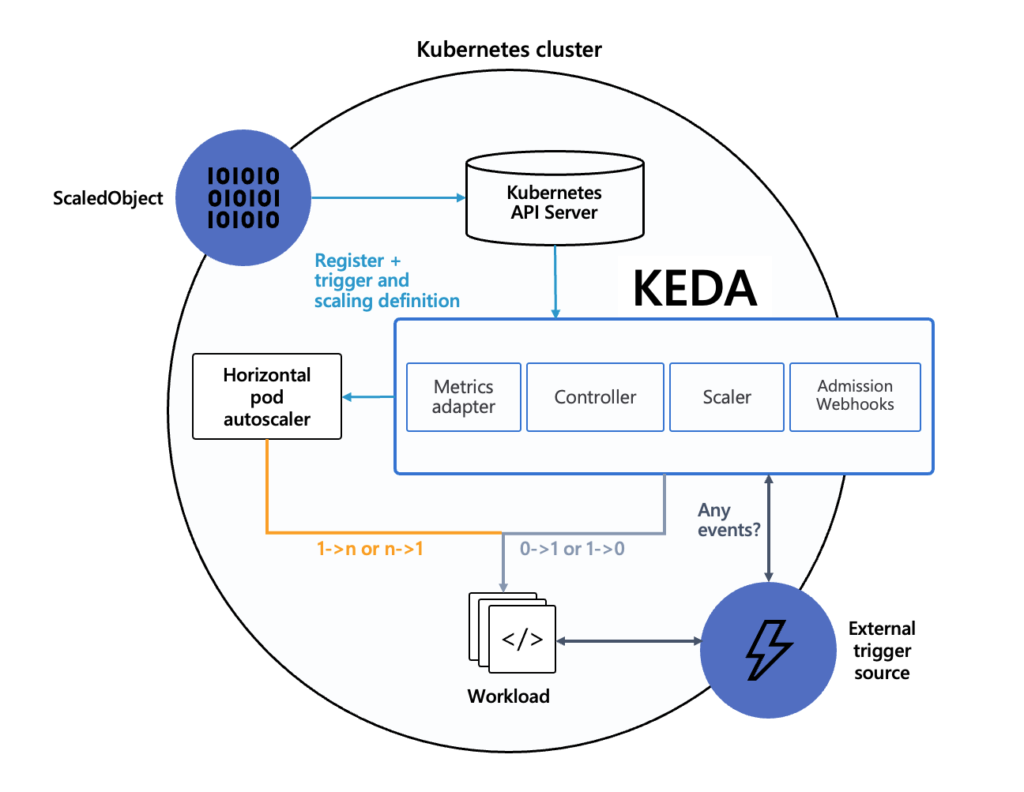
- Install KEDA: Begin by installing KEDA into your Kubernetes cluster. It’s a straightforward process that usually involves applying custom resource definitions and deploying the KEDA controller.
- Configure Event Sources: Identify the event sources relevant to your application, such as Apache Kafka, Azure Functions, or RabbitMQ.
- Define Scaling Rules: Specify how KEDA should scale your application pods based on the data it collects from event sources. You can set threshold values and determine scaling behavior.
- Monitor and Fine-Tune: Continuously monitor the performance of your applications and the effectiveness of KEDA’s scaling rules. Adjust configurations as needed to optimize scalability.
KEDA Ecosystem and Future Developments
KEDA has gained traction in the Kubernetes ecosystem, with integrations and partnerships that enhance its capabilities. As the Kubernetes landscape evolves, we can expect further developments in KEDA’s features and support for additional event sources and use cases.
Kubernetes Event-Driven Autoscaling (KEDA) represents a significant leap forward in the world of Kubernetes orchestration. It empowers organizations to build applications that can seamlessly scale in response to real-time events and metrics, ensuring performance, cost-efficiency, and reliability. As businesses increasingly rely on Kubernetes for container orchestration, KEDA emerges as a vital tool to meet the demands of modern, scalable applications. By bridging the gap between Kubernetes and event-driven computing, KEDA paves the way for a more dynamic and efficient future in application scalability.